

The Real Reason Korean Hair Looks Like That (And How to Replicate It)
...
Ask anyone who has been to Seoul what they notice about Korean hair, and the answer comes back surprisingly consistent. It's the shine. Not the kind of shine that looks oily or product-heavy — but that liquid-glass luminosity that suggests genuinely healthy hair from root to end. The good news is that this isn't genetic luck. It's routine. And unlike the K-beauty skincare routines that have already won over half the world, Korean haircare remains a bit of an insider secret — which means there's still genuine discovery to be had here.
Your scalp is skin. Treat it like it.

This is the foundational insight that separates Korean haircare from most Western approaches: the scalp is an extension of your skin, not just the base of your hair. It has a microbiome, a pH level, oil glands, and a barrier that can be disrupted, damaged, or nourished. When you start treating your scalp with the same attention you give to your face, the hair that grows from it changes — it comes in stronger, shinier, and more resistant to the damage of daily styling and environmental stress.
Western haircare has historically been about the hair itself — conditioning agents, shine serums, heat protectants for the shaft and ends. Korean haircare starts upstream, with the environment from which hair grows. Scalp scrubs to exfoliate buildup. Scalp tonics applied post-wash to balance pH and stimulate circulation. Pre-shampoo treatments to dissolve sebum before cleansing even begins. The entire philosophy is oriented differently: prevent damage at the source rather than compensate for it later.
Fermented rice water, camellia oil, and the ingredients that actually do something

Korean haircare draws on a long tradition of botanical ingredients that Western formulas are only now discovering. Fermented rice water — not just rice water, but rice water fermented for 12 to 36 hours — develops elevated inositol (vitamin B8) that can actually penetrate damaged cuticles and repair from within. It's not folklore. The science behind it is solid, and you'll find it as a key ingredient in many of the most effective Korean hair treatments on the market.
Camellia oil (from the Camellia japonica or sinensis plant) has been used in East Asian hair care for centuries. Its fatty acid composition is remarkably close to the natural sebum produced by the scalp, which means it penetrates easily without sitting on top of the hair shaft. Ginseng root extract stimulates circulation in the follicle and appears in everything from thinning-hair tonics to daily scalp serums. Green tea extract — high in EGCG — has antioxidant and anti-inflammatory properties that support scalp health. These aren't marketing ingredients. They're functional ones with evidence behind them.
More recently, Korean brands have been importing skincare actives into haircare formulas: panthenol (vitamin B5) for moisture and elasticity, niacinamide for scalp barrier support, ceramides to seal the cuticle, and amino acids to strengthen the protein structure of each strand. It's the same logic as skincare — use ingredients that work with the biology, not against it.
A realistic haircare routine that you can actually maintain

The full Korean hair routine can involve many steps — but the honest version that most people actually do on a regular basis is three to four. A scalp scrub or exfoliating scaler once a week to clear buildup. A low-pH, sulphate-free shampoo on wash days, focused on the scalp rather than worked through the length. A treatment mask or protein conditioner applied mid-lengths to ends and left for five to ten minutes. And finally, a lightweight hair oil or essence applied to damp hair before air-drying.
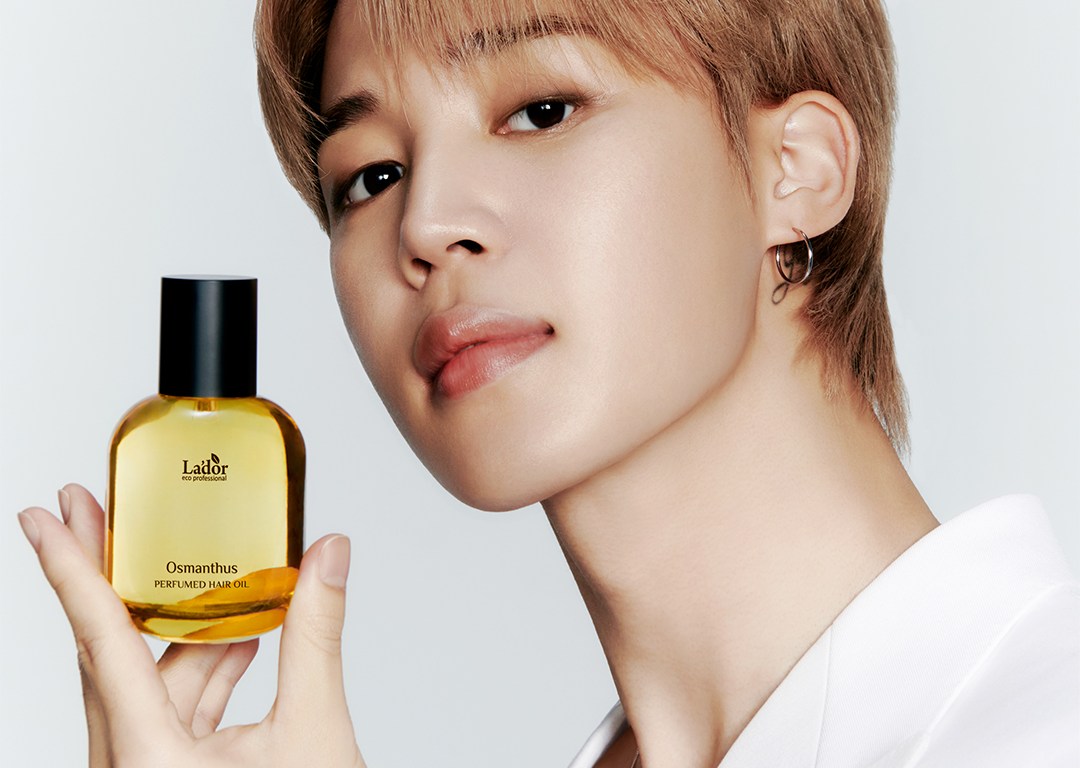
That last step — the hair oil or essence — is worth particular attention. Korean hair oils are formulated entirely differently from the heavy, coating oils that have given "hair oil" a bad reputation in Western markets. They're lightweight, non-greasy, and designed to absorb rather than sit on the surface. Applied to damp hair before drying, they seal the cuticle as the hair dries, locking in moisture and creating the high-shine finish that makes K-drama hair so distinctive. Applied to dry hair, they smooth frizz without adding visible product weight.
A word on patience. Korean haircare results are cumulative. Most people notice a difference in scalp condition — reduced oiliness, less flaking, improved comfort — within two to three weeks. The visible improvement in shine and texture usually takes four to six weeks of consistent use. The approach is fundamentally different from a product that promises an immediate transformation: it's building a healthier foundation over time, and the results stick because they're structural rather than cosmetic.
Shop Korean Haircare at Kool Seoul


Written by Nora — Team Koolseoul, Seoul.